
Find Your Perfect Moisture Meter
3 quick questions — get a personalized recommendation from our full lineup.
What material are you testing?
Can the meter leave small marks on the surface?
What's your budget?
-

 LIMITED OFFER
Moisture Meter Concrete Slab | DeepDetection™
Regular price $139 USDRegular price$169 USDSale price $139 USDLIMITED OFFER -

 LIMITED OFFER
Moisture meter for tile | TileGuard™ Rechargeable
Regular price $119 USDRegular price$149 USDSale price $119 USDLIMITED OFFER -

 LIMITED OFFER
Moisture meter for home inspection | Heavy-duty
Regular price $99 USDRegular price$119 USDSale price $99 USDLIMITED OFFER -

 LIMITED OFFER
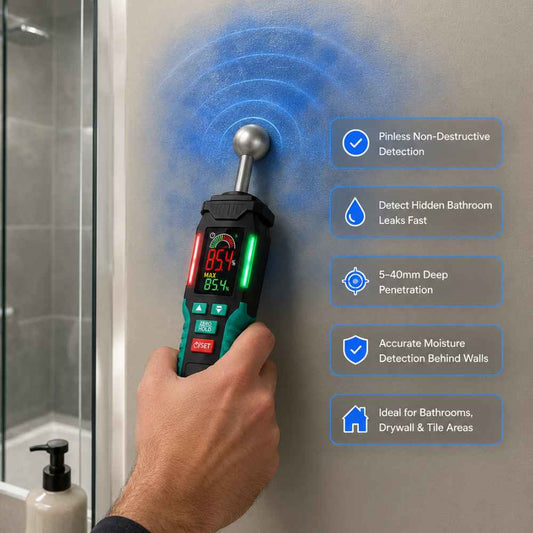
Bathroom moisture meter | TileProbe
Regular price $99 USDRegular price$119 USDSale price $99 USDLIMITED OFFER -
Log moisture meter | Ranger
Regular price $79 USDRegular price -

 LIMITED OFFER
Firewood Moisture Meter Seasoning Checker
Regular price $69 USDRegular price$79 USDSale price $69 USDLIMITED OFFER -

 LIMITED OFFER
Air moisture meter | DewGuard
Regular price $99 USDRegular price$129 USDSale price $99 USDLIMITED OFFER -

 LIMITED OFFER
Pro Pinless moisture meter
Regular price $99 USDRegular price$119 USDSale price $99 USDLIMITED OFFER -
Walnut moisture meter | WalnutGuard
Regular price $89 USDRegular price -

 LIMITED OFFER
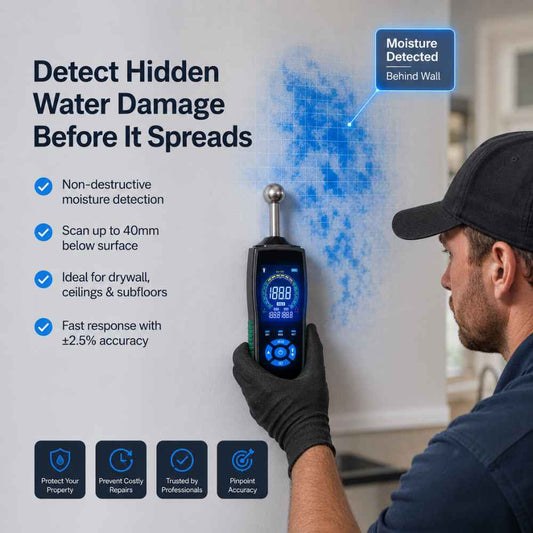
Moisture meter for water damage | FloodRead
Regular price $119 USDRegular price$149 USDSale price $119 USDLIMITED OFFER -
Carpet moisture meter | DampTrace
Regular price $89 USDRegular price -

 LIMITED OFFER
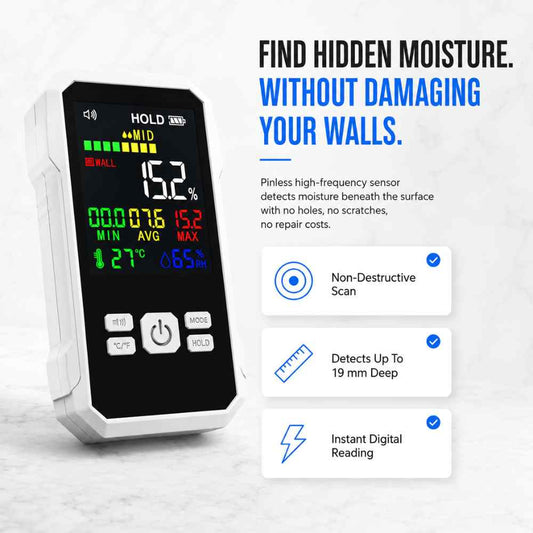
Basement moisture meter | All in One Tool
Regular price $89 USDRegular price$99 USDSale price $89 USDLIMITED OFFER -

 LIMITED OFFER
Moisture meter for wood flooring | Multi-Modes
Regular price $99 USDRegular price$119 USDSale price $99 USDLIMITED OFFER -

 LIMITED OFFER
Moisture meter for crawl space | CrawlGuard
Regular price $99 USDRegular price$119 USDSale price $99 USDLIMITED OFFER -
Stucco moisture meter | ProShield
Regular price $99 USDRegular price -

 LIMITED OFFER
Pinless Moisture Meter for Drywall
Regular price $119 USDRegular price$149 USDSale price $119 USDLIMITED OFFER -

 LIMITED OFFER
Professional moisture meter | All-in-one
Regular price $299 USDRegular price$349 USDSale price $299 USDLIMITED OFFER -
Furniture wood moisture meter
Regular price $89 USDRegular price -

 LIMITED OFFER
Timber moisture meter | Pro Calibrated
Regular price $99 USDRegular price$119 USDSale price $99 USDLIMITED OFFER -
Woodworking moisture meter | Pro
Regular price $99 USDRegular price -
Pin moisture meter
Regular price $99 USDRegular price -

 LIMITED OFFER
Hardwood moisture meter | Compact
Regular price $89 USDRegular price$99 USDSale price $89 USDLIMITED OFFER -
Bamboo moisture meter | FloorGuard
Regular price $89 USDRegular price -
Moisture meter for subfloor | FloorGuard
Regular price $119 USDRegular price -
Moisture Meter Sheetrock
Regular price $99 USDRegular price -
High quality moisture meter | Spherical Sensor 40mm
Regular price $219 USDRegular price -
Pin pinless moisture meter | Handheld
Regular price $199 USDRegular price -
Pin type wood moisture meter | Pro
Regular price $79 USDRegular price -
Moisture meter for pressure treated wood
Regular price $139 USDRegular price -

 LIMITED OFFER
Moisture meter for deck | High-accuracy
Regular price $99 USDRegular price$129 USDSale price $99 USDLIMITED OFFER -
Hand held moisture meter | Calibrated
Regular price $119 USDRegular price$119 USDSale price $119 USD -
Digital wood moisture meter | Sensor
Regular price $79 USDRegular price













Moisture detector:
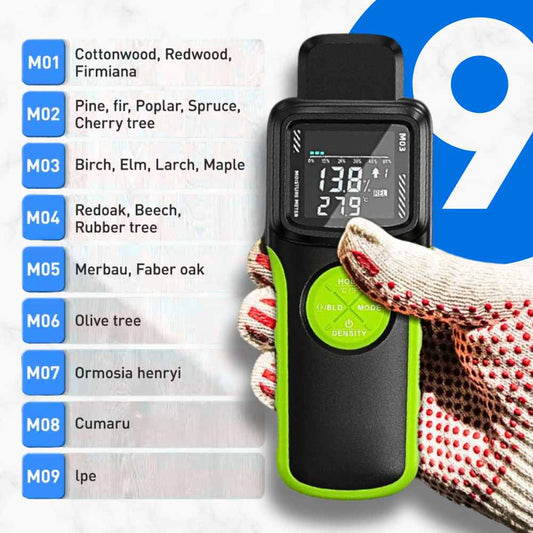
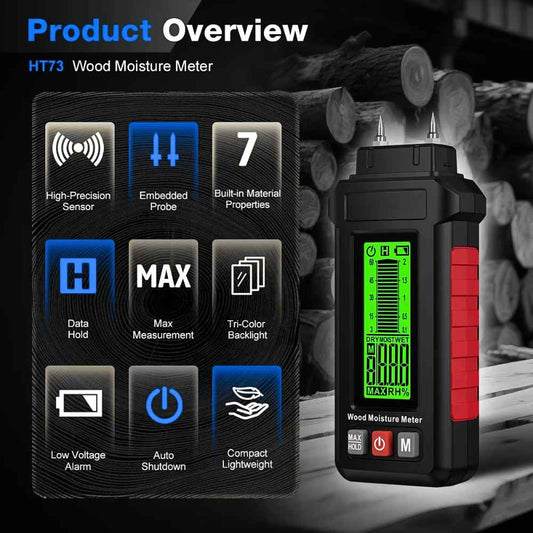
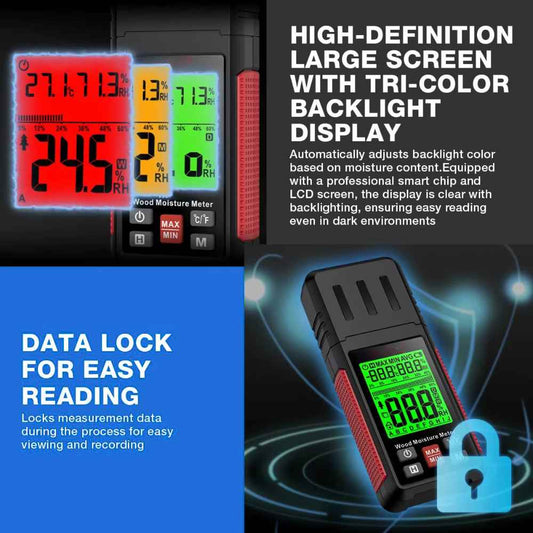
A moisture meter is a precision diagnostic instrument that quantifies the water held within a solid material, expressed as either % MC (moisture content) , the ratio of water mass to the material's dry mass , or % WME (wood moisture equivalent), a normalized scale that converts non-wood readings to an equivalent wood reference point for cross-material comparison. Two distinct physical principles drive how meters produce those readings. Resistive measurement, used in pin-type meters, passes a low-voltage current between two electrodes inserted into the material and derives % MC from the electrical resistance the material presents , wetter material conducts current more freely, drier material resists it more. Dielectric measurement, used in pinless meters, emits a low-frequency electromagnetic field into the material and reads the variance in dielectric constant caused by water molecules disrupting that field. Professional-grade meters cover 5–99% MC across most building materials and 0–53% on wood. The sections below cover both measurement methods in technical depth, then route you directly to the right sub-collection for your material.

Pin-Type Moisture Meters:
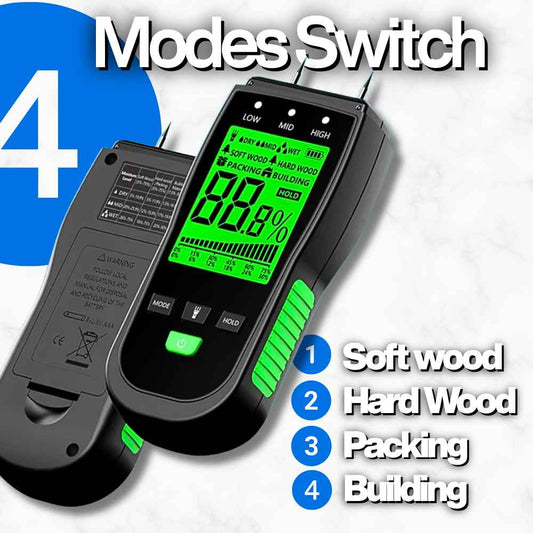
A pin-type moisture meter works by driving two electrode pins into the material surface, completing a low-voltage circuit between them. The meter calculates % MC by measuring the electrical resistance across that circuit and mapping the result against a calibration table specific to the material type. Because the measurement requires direct electrode contact, the reading reflects moisture at the exact depth of insertion , typically 1/4” to 1” depending on pin length and material density. That depth-specificity is the method's defining characteristic: a reading at 1/4” and another at 1” on the same piece of stock can differ substantially, which makes pin meters the right instrument when quantifying a moisture gradient between surface and core.
Pin meters are compatible with wood in any form, drywall, plaster, insulation, and , with hammer-probe or deep-wall electrode accessories , concrete and masonry. Their principal advantage is localized precision: a confirmed reading at a known depth is irreplaceable when depth-profiling thick stock or verifying that surface drying has reached the core of the material. The functional limitation is physical , every reading leaves two small electrode marks. On rough framing lumber or split firewood, that is immaterial. On finished or cosmetically sensitive surfaces, it disqualifies the method entirely. For those applications, a pin-type moisture meter with interchangeable probe lengths covers the widest range of resistive measurement needs.

Pinless Moisture Meters:
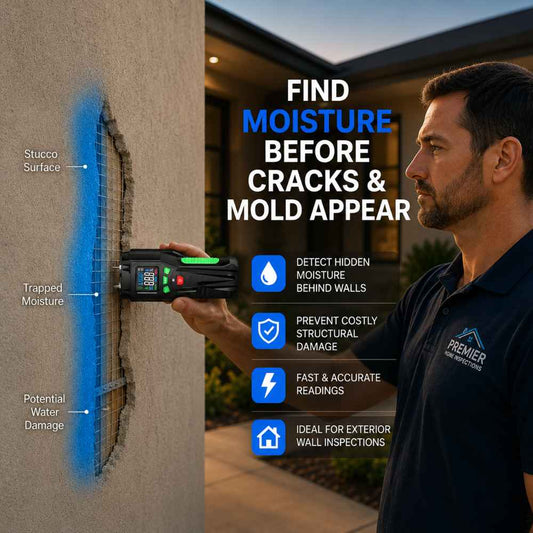
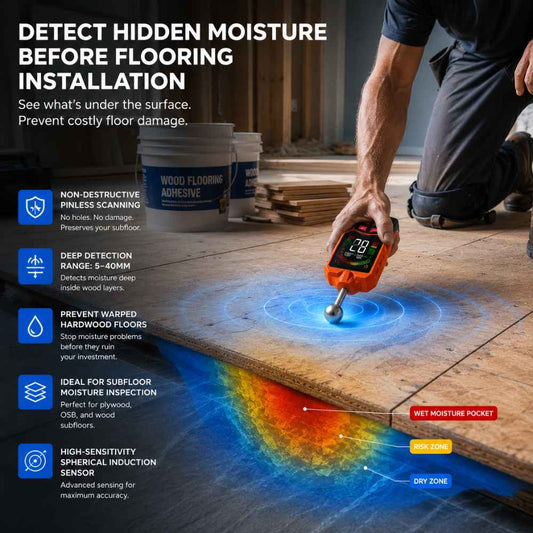
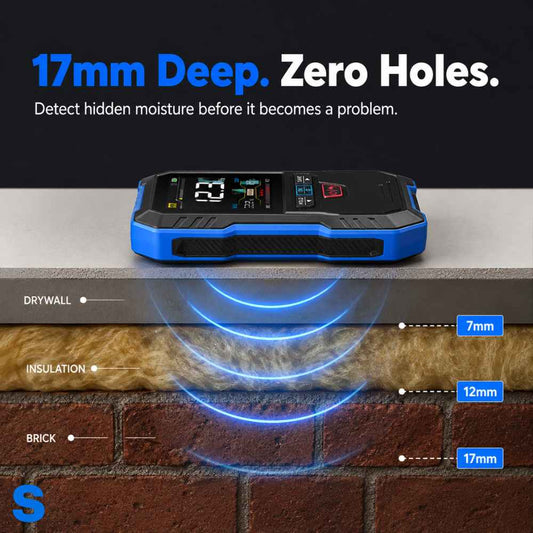
A pinless moisture meter generates a low-frequency electromagnetic field that penetrates the material without any surface contact. Water molecules carry a dielectric constant significantly higher than most dry building materials, so the meter detects moisture by measuring how much the field's return signal deviates from a dry-material baseline. Most pinless meters scan to 3/4” or 1.5” below the surface, with scan depth determined by sensor frequency and material density.
The reading a pinless meter produces is area-averaged across the entire scan footprint , typically several square inches , rather than point-specific. That characteristic makes pinless meters the fastest tool for screening large surfaces: a wall, a subfloor, a ceiling grid. An inspector can cover hundreds of square feet in the time a pin meter covers dozens. The tradeoff is spatial resolution. A localized moisture pocket smaller than the scan footprint can be masked by surrounding dry material, pulling the averaged reading toward a false normal. For that reason, pinless meters function as the primary screening instrument, and a pin meter is used to confirm and depth-profile any anomaly the scan identifies.
Accuracy and Calibration of Moisture Meter:
Professional-grade moisture meters achieve ±1–2% MC accuracy under controlled conditions, but three material-side factors determine how closely a field reading reflects true moisture content. Material temperature alters both electrical resistance and dielectric constant independently of moisture , a cold piece of lumber reads wetter than it is at the same actual % MC, and a warm concrete slab introduces the same distortion in the opposite direction. Material density affects how electromagnetic fields propagate and how resistance distributes across a measurement circuit, which is why professional meters use material-specific calibration tables rather than a single universal curve. Surface salinity or contamination , road salt residue, concrete efflorescence, chemical treatments, surface coatings , introduces conductive or dielectric interference that skews readings regardless of the measurement method used. Calibration is the process by which a meter's output is verified against a known reference standard to confirm readings fall within the instrument's rated accuracy window; meters with onboard calibration-check modes or factory-traceable reference blocks deliver more consistent field performance than entry-level devices that offer no field verification capability.
Which method applies to your job depends entirely on your material and working conditions?
Find Your Moisture Meter:
Select the category that matches your material and application.
| Use Case | Method | Material | Key Requirement | Collection |
|---|---|---|---|---|
| Hardwood flooring & installation | Pin or pinless | Hardwood plank, subfloor | Plank and subfloor MC must align before installation | Shop → |
| Firewood & fuel wood | Pin | Split firewood | MC confirmed below combustion threshold at split and at burn | Shop → |
| Concrete & subfloors | Probe , distinct protocol | Concrete slab | Distinct probe type and protocol separate from wood-based measurement | Shop → |
| Drywall & building materials | Pinless | Drywall, plaster, insulation | Pinless area scanning across large wall and ceiling surfaces without damage | Shop → |
How We Select This Catalog of Moisture Meter?
Every moisture meter in this collection meets a minimum calibration accuracy threshold of ±2% MC across its rated material range and carries a display readable under field lighting conditions without magnification. Meters are evaluated for probe and housing build quality sufficient for repetitive field use, flimsy electrode pins and cracking bodies disqualify an otherwise accurate instrument. Meters that report readings without any onboard calibration-check capability are excluded, as are devices that cover only a single material type without a documented calibration basis for that material. Consumer-grade units marketed with professional specifications but built to consumer tolerances do not appear in this catalog. The result is a selection of instruments a contractor, inspector, or serious builder can deploy in the field with confidence in the reading they receive.
FAQ | Moisture Meters:
When should I use a pin moisture meter vs. a pinless moisture meter?
Use a pin meter when depth precision matters , thick stock, dense hardwoods, or any situation where you need to confirm that surface drying has reached the core of the material. Use a pinless meter when surface integrity is non-negotiable , finished floors, visible trim, drywall , or when you need to screen large areas quickly without leaving electrode marks. Most professional workflows combine both: pinless to scan and flag, pin to confirm and quantify any anomaly the scan identifies.
What do % MC and % WME mean on a moisture meter display?
% MC (moisture content) is the ratio of water mass to the material's dry mass , the standard measurement unit across wood, concrete, drywall, and other building materials. % WME (wood moisture equivalent) is a normalized scale that converts non-wood readings to an equivalent wood reference point, allowing cross-material comparison on a single display. For material-specific accuracy, always confirm your meter is set to the correct calibration mode for the surface you are testing.
Can one moisture meter work accurately across multiple materials?
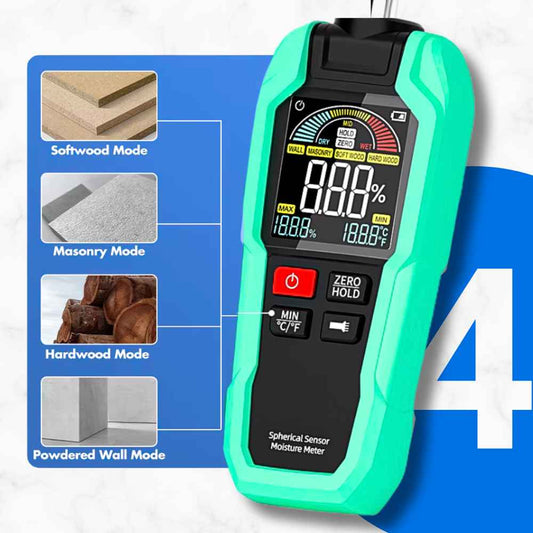
A single professional moisture meter can cover wood, drywall, plaster, insulation, and , with the appropriate probe accessories , concrete and masonry. The requirement is that the meter carries a documented calibration basis for each material it claims to measure, not a single universal curve applied to all surfaces. A wood-calibrated meter will not produce accurate readings on concrete or soil. Every meter in this catalog is evaluated for material-specific calibration before inclusion.
How do I know when a moisture meter needs recalibration?
Calibration drift becomes a practical concern when readings conflict with known-dry reference samples, when results vary inconsistently across the same material under identical conditions, or after the instrument has been dropped or exposed to temperature extremes. Meters with onboard calibration-check modes let you verify output against a factory reference in under 30 seconds , confirming the instrument is reading within its rated ±1–2% MC window before each session. All meters in this catalog carry an onboard verification mode for that reason.
Sensorahome selects every meter in this collection held to the accuracy and build standards above. If you know your material, the table above routes you directly. Browse the full collection above to compare models across methods, measurement ranges, and probe configurations.