Built for Concrete. Trusted on the Job Site:
Concrete slabs hold moisture longer than any other substrate, and that moisture can ruin a flooring installation worth thousands of dollars. A concrete moisture meter gives you a direct reading of moisture content or in-situ relative humidity in the slab before you commit to adhesive or underlayment. Under ASTM F2170, industry practice requires relative humidity in a slab to be at or below 75% RH before most flooring products are installed. Without a calibrated meter for concrete, that threshold is guesswork.
Flooring contractors, property inspectors, and homeowners tackling basement or garage renovations all rely on a moisture meter for concrete for the same reason: objective data beats visual inspection on a dense substrate that can look bone-dry while trapping vapor internally. This collection delivers the right tool for each of those use cases, from job-site workhorses to compact diagnostic instruments.
Which Concrete Moisture Meter Do You Need?
What to Look for in a Concrete Moisture Meter?
Measurement Method: Pin vs Pinless on Concrete
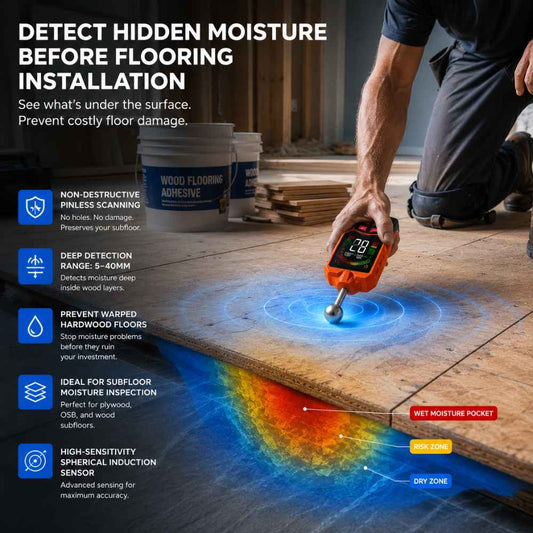
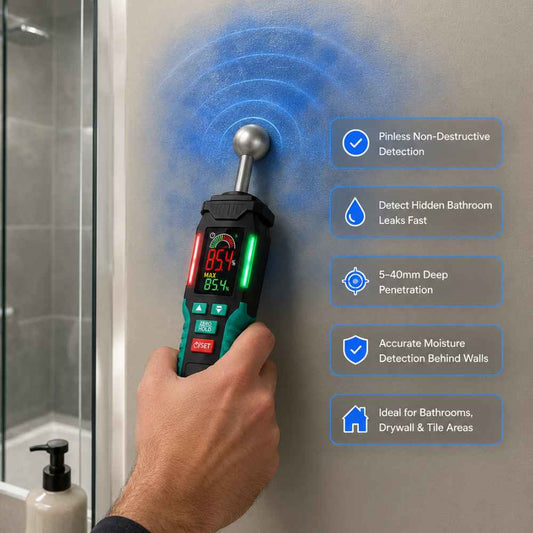
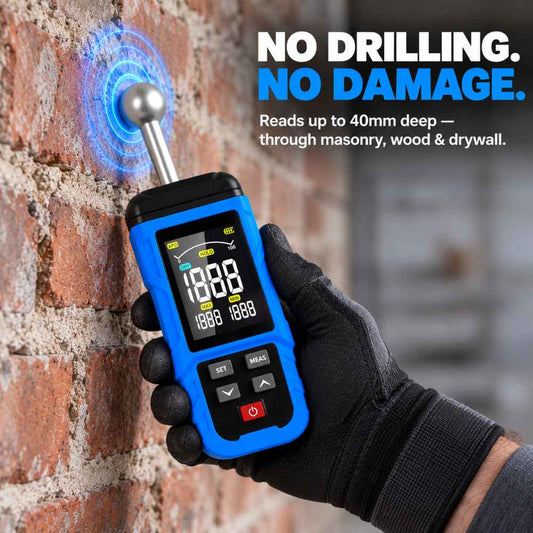
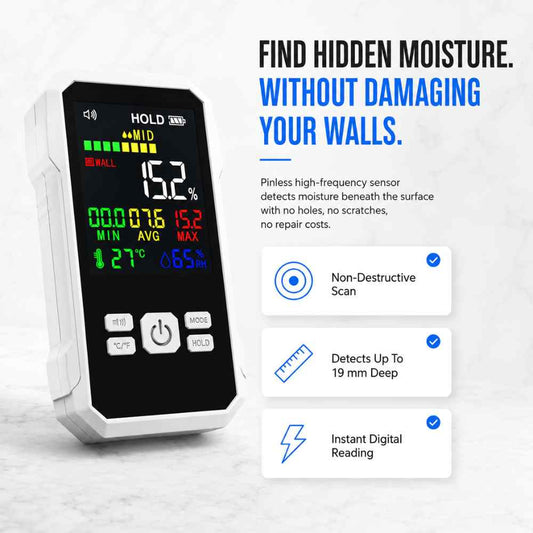
Concrete responds differently to each sensing method, and knowing the tradeoff saves you from a misread on a job-critical slab. Pin-type meters push electrical resistance between two probes and excel at spot-checking precise locations. Pinless meters scan with electromagnetic waves and let you cover a large slab area in minutes without breaking the surface.
| Criterion |
Pin-Type |
Pinless |
| Measurement method |
Electrical resistance between probes |
Electromagnetic scanning |
| Surface impact |
Minimal pin marks on concrete |
No surface contact required |
| Best for |
Spot-checking precise locations |
Scanning large slab areas quickly |
| Depth range |
Surface to ~1 inch |
Up to 3/4 inch typically |
| Accuracy on dense concrete |
High on surface layers |
Variable on very dense slabs |
| ASTM F2170 compliance |
Compatible with probe systems |
Check manufacturer specs |
| Concrete substrate context |
Reliable on dense cured slabs; probe depth critical for RH accuracy |
Signal attenuation increases on very dense or thick slabs |
| Typical price range |
$30–$200 |
$100–$400+ |
ASTM Compliance and Flooring Installation Standards
ASTM F2170 defines the in-situ relative humidity test method for concrete slabs. A meter or probe system that complies with this standard measures vapor pressure at depth inside the slab, not just at the surface, giving flooring professionals the data they need before any adhesive touches concrete. The 75% RH threshold set by ASTM F2170 is the most widely cited pass/fail line in the industry: readings above it mean the slab needs additional drying time or a compatible vapor retarder before installation begins.
For flooring contractors, this is not a suggestion. Most flooring manufacturers tie their warranty directly to documented slab moisture readings. Skipping the test, or using an uncalibrated meter for concrete, can void that warranty and shift liability for any subsequent failure onto the installer. Readings above 75% RH on a slab in a Miami new build in summer 2024 delayed installation by 18 days and required a vapor retarder upgrade, costing the contractor both time and materials.
Browse the full range of ASTM-compatible concrete moisture meters at sensorahome.com to find probes and meters that meet job-site documentation requirements.
Reading Range and Accuracy on Dense Substrates
Dense concrete resists moisture sensing differently than porous building materials. The higher mineral density can attenuate electromagnetic signals and compress resistance readings, so a meter tuned for lighter substrates will return unreliable numbers on a slab. Meters calibrated specifically for concrete report readings either as a direct % RH value via in-slab probes, which is the format ASTM F2170 requires, or as a scaled surface index when using contact resistance methods on cured slabs.
Measurement range and material-specific calibration are the two non-negotiable selection criteria for concrete. A wide reading range means you can detect both critically dry slabs and dangerously saturated ones without switching instruments. Calibration for concrete ensures the number on the display reflects what is actually happening inside that substrate. For meters that cover multiple surfaces beyond concrete, the complete moisture meter buying guide details how cross-material calibration modes work across substrates.
When You Need a Concrete Moisture Meter?
-
Before installing hardwood, LVP, or tile over a concrete slab.
Moisture trapped in an untested slab can buckle flooring, dissolve adhesive bonds, and trigger mold growth at the concrete-adhesive interface. Remediation on a failed concrete-slab installation, covering adhesive removal, slab drying or sealing, and full flooring replacement, typically runs $3,000 to $12,000 depending on area and flooring type.
-
After water intrusion or flooding in a basement or garage slab.
Concrete can retain significant internal moisture for weeks after a surface appears dry. A moisture meter for concrete confirms whether the slab has actually returned to a safe level, not just whether puddles have evaporated.
-
During new construction, before handing off to finish contractors.
General contractors who document concrete moisture readings with a calibrated meter create a paper trail that protects everyone. That data establishes the condition of the slab at handoff and is increasingly required by flooring subcontractors before they begin work.
Find the right concrete moisture meter for your job.
Frequently Asked Questions for a concrete moisture meter:
What is a concrete moisture meter used for?
A concrete moisture meter measures the moisture content or relative humidity inside a concrete slab or substrate. Flooring contractors use it to confirm a slab meets ASTM F2170 thresholds before installing hardwood, LVP, or tile. Property inspectors rely on it to document moisture risk, and homeowners use it to assess garage or basement slabs before renovation.
What moisture level is acceptable in concrete before flooring installation?
According to ASTM F2170, concrete relative humidity should be at or below 75% RH before most flooring adhesives are applied. Readings above that threshold put the adhesive bond at risk and can void manufacturer warranties. Some flooring systems allow up to 80% RH with compatible adhesives, but always verify the flooring product's own specification sheet.
What is the difference between a pin and pinless moisture meter for concrete?
A pin-type meter uses electrical resistance between two probes to spot-check precise locations on a concrete surface; a pinless meter uses electromagnetic scanning to survey large slab areas without contact.
sensorahome.com curates concrete moisture meters tested for field conditions, from single-slab spot checks to multi-site contractor workflows.


 LIMITED OFFER
 LIMITED OFFER
 LIMITED OFFER
 LIMITED OFFER
 LIMITED OFFER
 LIMITED OFFER