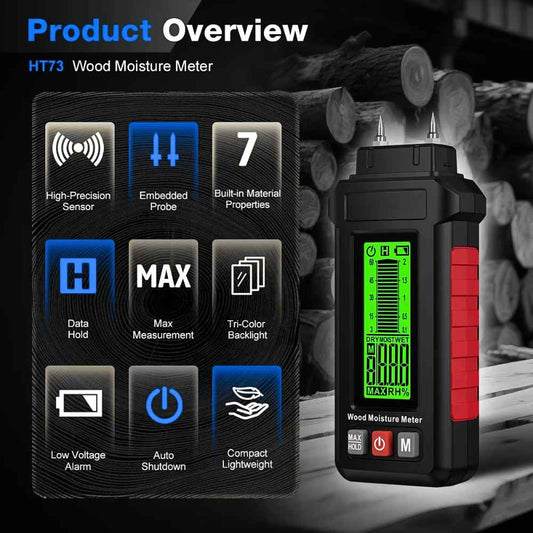
Every firewood moisture meter in this collection is chosen for one job: telling you whether your wood is ready to burn before it goes in the stove. Whether you heat with a wood stove, a fireplace insert, or an outdoor fire pit, you'll find a precise, easy-to-use meter here that takes the guesswork out of seasoning.
Firewood Moisture Meters , Burn Dry, Burn Safe:
Why Moisture Matters for Your Firewood:
Burning wet wood doesn't just produce less heat, it actively works against your heating system. Green or insufficiently seasoned firewood forces your stove to waste energy evaporating water instead of generating warmth, dropping your effective heat output by 30–40% compared to dry wood.
Creosote is the bigger concern. If you stack cords reading 28% moisture content in October and burn them in January, expect measurable creosote accumulation in your flue after just 4–6 weeks of regular use , a buildup that leads to chimney fires and costly cleaning. Excessive smoke, poor draft, and a fire that constantly needs relighting are the daily symptoms of wood that isn't ready.
The solution is simple: measure before you burn. A reliable meter for firewood moisture content takes 10 seconds per log and gives you a clear go/no-go number. The right tool makes that decision automatic.
Wood Moisture Meters
Which Firewood Moisture Meter Fits Your Setup?
The two main choices are pin meters and pinless meters. Each has a clear use case when it comes to firewood.
For split logs and rounds stacked in a cord or rick, a pin-type wood moisture meter gives you a precise reading at the core where moisture hides longest after the surface has dried out. Two small probes inserted directly into the end grain or a fresh split face return a moisture reading in seconds.
If you're moving through a large stack quickly , scanning an entire cord before stacking season wood for winter , a pinless wood moisture meter covers more ground without leaving marks. It reads through the surface using electromagnetic scanning, ideal for fast batch checks on cordwood before it comes inside.
For hardwood-heavy loads , dense species like oak, hickory, or hard maple that hold moisture longer than softwoods , a hardwood moisture meter is calibrated specifically for those species and gives more reliable readings across the full seasoning range.
| Meter Type |
Best For (Firewood) |
How It Measures |
Surface Impact |
Typical Price Range |
| Pin-type |
Split logs and rounds , precise spot reading at the core where surface drying can mislead |
Two probes inserted into wood surface |
Leaves 2 small pin holes |
$40–$80 |
| Pinless |
Large cordwood stacks , fast batch scanning before stacking or bringing wood indoors |
Electromagnetic scan through wood surface |
No surface damage |
$60–$120 |
Pin-type
Best for: Split logs and rounds , precise spot reading at the core where surface drying can mislead
How it measures: Two probes inserted into wood surface
Surface impact: Leaves 2 small pin holes
Price range: $40–$80
Pinless
Best for: Large cordwood stacks , fast batch scanning before stacking or bringing wood indoors
How it measures: Electromagnetic scan through wood surface
Surface impact: No surface damage
Price range: $60–$120
The 20% Rule, The Only Number You Need for firewood:
You don't need to memorize a chart. You need one threshold: 20% moisture content. The EPA's Burn Wise program recommends burning firewood at or below 20% moisture content for both efficiency and air quality , and NFPA 211 reinforces the same standard for chimney safety.
Below 20% MC, your wood burns cleaner, hotter, and with far less creosote risk. Above it, you're fighting the wood instead of heating your home. A firewood moisture reading above 25% on split logs that "look dry" is more common than most people expect , surface drying outpaces core drying, especially in tightly stacked, unsplit rounds. A meter tells you what your eyes can't.
Firewood MC Targets at a Glance:
| Wood Condition |
Moisture Content |
What It Means for Your Fire |
| Freshly cut / green wood |
40–60%+ |
Do not burn , excessive smoke, no usable heat |
| Partially seasoned |
25–35% |
Poor efficiency, heavy creosote risk |
| Ready to burn |
15–20% |
Good heat output, clean burn |
| Kiln-dried / ideal |
10–15% |
Maximum wood stove efficiency, minimal creosote |
Frequently Asked Questions , Firewood Moisture Meter:
Do I need a special moisture meter for firewood, or will any wood moisture meter work?
Any quality wood moisture meter will work for firewood , but a meter calibrated for wood specifically (rather than a multi-material meter) gives you more reliable readings across the seasoning range. Most dedicated wood meters cover the 6–60% range that matters for firewood. A digital wood moisture meter designed for wood species will give you more consistent results on split logs and cordwood than a generic or construction-grade meter.
What moisture level should firewood be before I burn it?
Firewood should read below 20% moisture content before you burn it. The EPA and NFPA 211 both use 20% MC as the threshold for safe, efficient burning. Wood reading 15–20% produces strong heat output with minimal smoke and creosote. Wood above 25% is not ready to burn, regardless of how long it has been stacked.
Is a pin or pinless moisture meter better for firewood?
Pin meters are generally better for individual log accuracy , they read at the core where moisture concentrates longest. Pinless meters are better for speed when checking large quantities of cordwood quickly. If you season your own wood and want to know exactly when a specific log is ready, a pin meter gives you the most precise answer. If you're buying or receiving a delivery of seasoned wood and want to spot-check the whole batch fast, a pinless meter saves significant time.
How long does firewood need to season before it reads below 20%?
Seasoning time depends on species, split size, and storage conditions. Softwoods like pine and fir typically reach below 20% MC in 6–12 months when split and stacked with good airflow. Dense hardwoods like oak and hickory often need 18–24 months. A moisture meter removes the guesswork entirely , instead of estimating by calendar, you check the actual reading and know when the wood is ready.
Dry firewood isn't just about better heat , it's the single most effective step you can take for chimney safety and burn efficiency each season. If you want to go deeper on getting the most from your meter once it arrives, our guide on how to use your firewood moisture meter walks you through getting accurate readings every time.
Looking for meters across other wood applications? Explore the full moisture meter collection for lumber, woodworking, and construction use cases.
Caleb Rowland : Certified Indoor Air Quality Specialist & Moisture Diagnostics Consultant | sensorahome.com specialist contributor | Updated: March 2026


 LIMITED OFFER