
-
Professional moisture meter | All-in-one
Regular price $299.90 USDRegular price -
Moisture meter for crawl space | CrawlGuard
Regular price $79.90 USDRegular price -
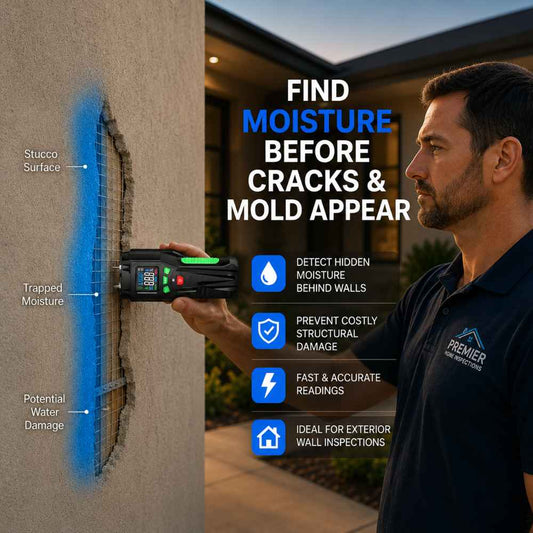
Stucco moisture meter | ProShield
Regular price $79.90 USDRegular price -
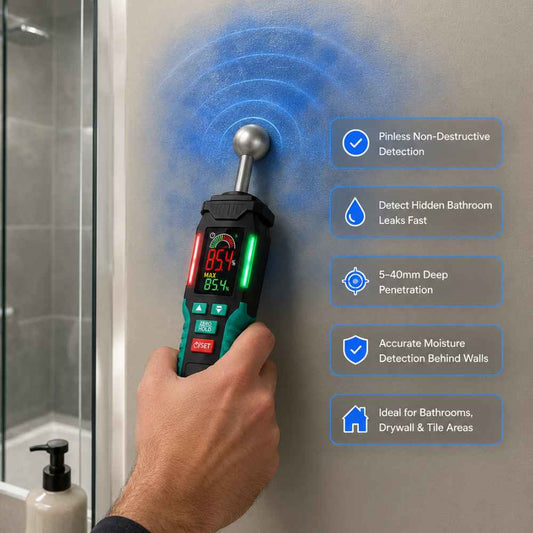
Bathroom moisture meter | TileProbe
Regular price $79.90 USDRegular price -
Moisture meter for subfloor | FloorGuard
Regular price $99.90 USDRegular price -
Moisture meter for water damage | FloodRead
Regular price $79.90 USDRegular price -
Moisture Meter Sheetrock
Regular price $99.90 USDRegular price -
Hand held moisture meter | Calibrated
Regular price $109.90 USDRegular price -
Basement moisture meter | All in One Tool
Regular price $89.90 USDRegular price -

 LIMITED OFFER
Moisture meter for home inspection | Heavy-duty
Regular price $89.90 USDRegular price$109.90 USDSale price $89.90 USDLIMITED OFFER -
Pin pinless moisture meter | Handheld
Regular price $149.90 USDRegular price











Moisture meter for walls
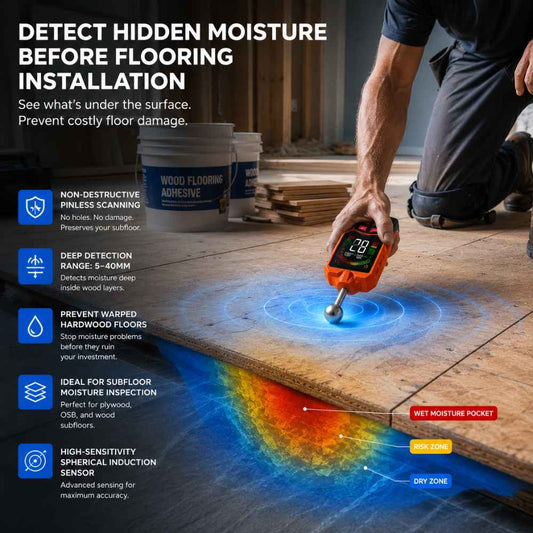
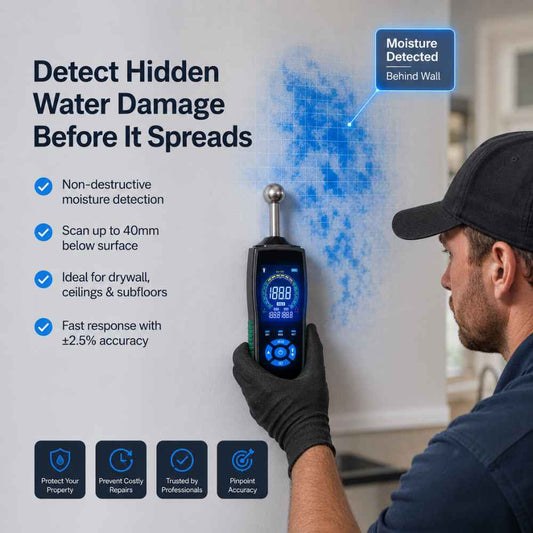
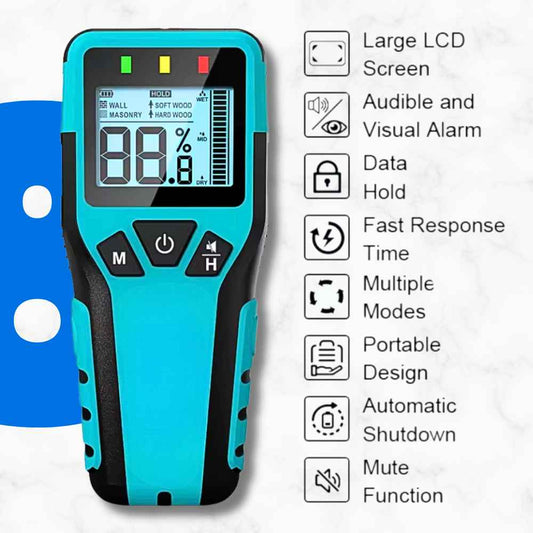
This collection brings together professional-grade moisture meters built for wall surface diagnostics, from a single suspicious stain to a full post-flood assessment. Each instrument is selected for its ability to detect hidden moisture in vertical assemblies accurately, without requiring destructive access. Homeowners, contractors, property managers, and certified inspectors all use these tools to catch water intrusion before it escalates into structural damage.
Wall Moisture Meter
A wall moisture meter measures the moisture content present within a wall assembly without requiring you to cut, drill, or dismantle anything. It gives you a readable value so you can act on data rather than guesswork.
Two instrument types are available in this category. Pin-type meters confirm a specific suspect point; pinless meters let you scan broad surface areas without breaking the finish. The right choice comes down to the size of the area you need to assess and whether the wall surface must remain intact. The decision box below narrows it down in under a minute.
For a technical breakdown of how each technology performs across different materials and depths, see our pin vs pinless moisture meter full comparison guide.
Which wall moisture meter is right for you?
Multiple rooms / full assessment: Pinless meter One specific spot: Pin-type meter
Yes: Pinless or dual-mode No (utility space, remediation site): Pin-type is fine
Yes: Dual-mode with data logging No: Any meter in this collection
Moisture Detector for Walls
A moisture detector for walls is typically what buyers search for when the priority is finding a problem rather than measuring it with laboratory precision. The distinction matters at the point of purchase: detection-focused tools favor broad surface coverage, clear alarm thresholds, and fast results over decimal-point accuracy.
Picture this scenario. You return home after a pipe burst in the bathroom three weeks ago. The repair company patched the visible damage, but one wall near the baseboard still feels slightly soft underfoot. Running a non-invasive moisture detector along that wall takes under four minutes. The meter flags a zone 14 inches wide registering at 31% relative moisture content, well above the 16% threshold at which mold growth becomes a serious risk in framed assemblies. That reading gives you something concrete to bring back to the contractor before any cosmetic repair gets scheduled.

The meters in this collection cover framed stud walls, plaster over lath, OSB sheathing panels, and masonry block surfaces. No single material is the focus here: the selection is built around wall assemblies as a category. For guidance on interpreting specific readings after you have your tool, see our article on how to interpret moisture readings on wall surfaces.
| Wall Material | Recommended Meter Type | Key Consideration |
|---|---|---|
| Framed interior wall (standard finish) | Pinless | Scan behind surface without surface damage |
| Plaster over lath | Dual-mode | Irregular density benefits from pin confirmation |
| OSB sheathing (exterior wall) | Pin-type | Probe depth reaches core moisture zone |
| Concrete block / masonry | Pinless | Non-destructive scan; apply masonry calibration mode |
| Timber frame (log or post-and-beam) | Pin-type | Deep probe required; select appropriate material mode |
Who Needs a Moisture Meter for Walls?
Homeowners dealing with a recent leak, a flood event, or unexplained humidity spikes use a wall moisture meter to confirm whether the damage is contained or still spreading. Acting on a confirmed reading costs far less than discovering active moisture six months after the fact, when remediation estimates routinely run between $3,000 and $15,000 depending on the extent of structural involvement.
Property managers and landlords rely on these tools during routine inspections to document wall conditions across multiple units. A single scan session before a tenant turnover can identify developing issues before they turn into habitability complaints or costly repairs.
Contractors and remodelers need a moisture reading before they close a wall cavity. Installing over a wet framing assembly is a code violation under IRC Section R319 and creates long-term liability. A quick check takes two minutes and protects the finished product.
Home inspectors use non-invasive wall meters as a standard part of a property walk-through, flagging elevated zones for further investigation without requiring destructive access. A flagged reading at 24% in a bathroom wall, for example, is sufficient grounds to recommend professional remediation assessment before a real estate transaction closes. And if you need a moisture meter for drywall, explore our second collection now.
Frequently Asked Questions with a moisture wall meter
Do I need a pin or pinless moisture meter for walls?
Pin meters work best when you have already located a suspect area and need a confirmed depth reading; pinless meters are faster for scanning large wall surfaces without surface damage. For a single wet spot behind a baseboard, a pin-type instrument gives you a precise number at the point of concern. For a full room sweep or a multi-room assessment, a pinless or dual-mode meter covers more ground in less time.
What moisture reading in a wall signals a real problem?
A moisture content reading above 16% in a framed wall assembly is the threshold at which mold risk becomes significant, and any reading at or above 20% in structural framing exceeds the IRC Section R319 limit for installation. Readings between 12% and 16% indicate elevated moisture that warrants monitoring. Anything above 20% calls for immediate investigation and, in most cases, professional remediation assessment before any repair work proceeds.
Can one moisture meter work on different types of walls?
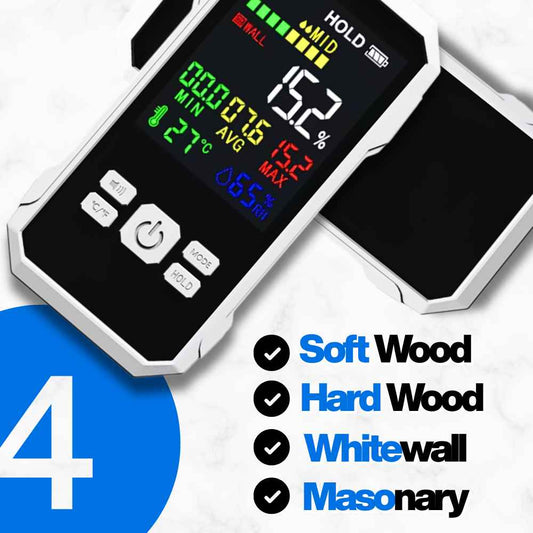
Yes, most meters in this collection are calibrated for multiple wall materials and include selectable material modes. A dual-mode meter with adjustable calibration settings can move between a gypsum-surfaced stud wall, a plaster assembly, and a masonry block surface within the same inspection session. Verify that the meter you select includes a masonry or reference mode if concrete block walls are part of your use case.
How reliable is a moisture meter for finding hidden leaks in walls?
A quality pinless moisture meter reliably detects elevated moisture zones up to 3/4 inch to 1.5 inches beneath the surface, which covers the typical depth of a leak-saturated stud cavity in a standard framed wall. It does not show you where water is physically entering, but it maps where moisture has accumulated so you can investigate further. For insurance documentation or pre-sale inspections, dual-mode meters that produce a logged reading provide the most defensible record of findings.